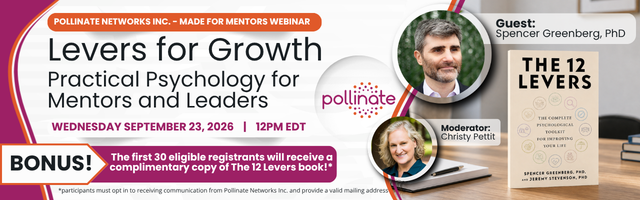
Made for Mentors: A Pollinate Networks Inc. Webinar
At Pollinate Networks Inc., we work with thousands of mentors every year. That’s why we’ve designed this session with mentors in mind, exploring practical psychology that can help create better conversations, stronger relationships, and more meaningful mentoring experiences.
Join Pollinate Networks Inc. for another conversation in our ongoing webinar series, where we bring together thought leaders, researchers, and practitioners to explore ideas that strengthen mentoring, leadership, learning, and professional growth.
Wednesday, September 23, 2026
12:00 PM EDT | Live on Zoom
In this session, Pollinate Networks Inc. CEO Christy Pettit will moderate a live discussion with Dr. Spencer Greenberg PhD, entrepreneur, mathematician, founder of ClearerThinking.org, and co-author of The 12 Levers: The Complete Psychological Toolkit for Improving Your Life.
Together, they’ll explore how practical psychology can lead to better conversations, stronger mentoring outcomes, and growth that lasts. Drawing on research spanning more than 100 self-help books and 23 evidence-based therapies, Spencer will share practical techniques that mentors, leaders, and professionals can use to improve communication, navigate challenges, strengthen relationships, and support meaningful personal and professional development.
Whether you mentor others, lead a team, or are looking to grow yourself, you’ll leave with practical, evidence-based insights you can apply immediately.
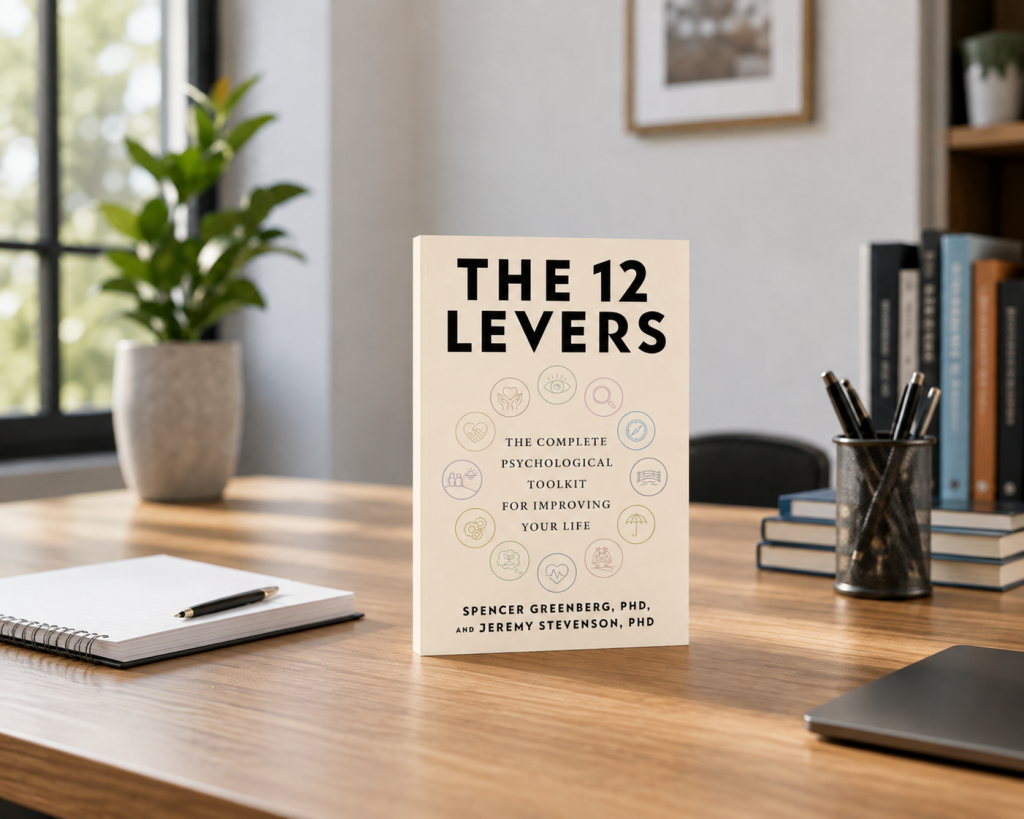
BONUS: Register early for the opportunity to receive one of 30 complimentary hardcover copies of The 12 Levers: The Complete Psychological Toolkit for Improving Your Life. During registration, simply let us know you’re interested. Eligible recipients will be contacted directly to confirm their mailing address for delivery. Participants must opt in to receiving communication from Pollinate Networks Inc. and provide a valid mailing address to be eligible.
UPDATE: All complimentary book copies have now been accounted for.
Thank you to everyone who expressed interest in receiving a copy of The 12 Levers: The Complete Psychological Toolkit for Improving Your Life. Eligible recipients will be contacted directly with next steps regarding delivery.
Registration for the webinar remains open, and we hope you’ll still join us for the conversation.
Book Giveaway Disclaimer: A limited number of complimentary copies of The 12 Levers are available to the first 30 eligible registrants who indicate their interest. To be eligible, you must complete the webinar registration, opt in to receive communications from Pollinate Networks, and provide a valid mailing address and phone number when requested. Indicating interest does not guarantee that you will receive a book. Eligibility and availability will be confirmed by Pollinate Networks, and selected recipients will be contacted directly. Limit one copy per eligible registrant, while supplies last.