
What does AI add to mentoring, and where does mentoring still need humans in the lead?
In Pollinate’s December 4, 2025 webinar with Christy Pettit, CEO of Pollinate Networks Inc. and AI pioneer Monica Anderson, we explored a practical question we hear from mentoring leaders every week: What does AI add to mentoring, and where does mentoring still need humans in the lead?
This was not a conversation about replacing mentors or automating relationships. It was about upgrading how mentoring programs work, improving mentor matching, and using AI to reduce friction so people can spend more time on what matters: real learning, trust, and progress.
Pollinate has been designing and delivering mentoring programs since 2008, and we are best known for our Cross Pollinate AI matching technology and our expertise in psychometrics. We bring a data-driven lens to mentoring outcomes, while staying grounded in what makes mentoring meaningful: authentic human relationships.
Below is a mentoring-focused recap of the webinar, with takeaways you can apply whether you run a formal mentoring program, a peer mentoring network, or an internal mentorship initiative for leadership development.
A useful baseline: AI adds speed, structure, and options, but it still guesses
Monica offered a helpful reset on how to think about AI outputs. In real life, problem-solving is not pure certainty, it is informed guessing, and “AIs are guessing machines, just like humans.”
For mentoring and learning, this matters because it defines the role AI can play:
- AI can accelerate work that benefits from breadth: patterns, options, comparisons, and first drafts.
- AI cannot guarantee truth, context, or judgement.
- The best results come when a human is accountable for deciding what to trust, what to verify, and what to do next.
This is exactly where mentoring programs become even more valuable: mentors help mentees turn information into understanding and action.
What AI adds to mentoring relationships
1) AI can act as a thought accelerator before and after mentoring sessions
Christy described a strong use case for AI in a mentorship capacity: use AI to expand the field of view around a mentee’s question. Are there comparisons you are not thinking of? Are there additional questions you could ask?
In practice, this looks like:
- Before a mentoring meeting, a mentee uses AI to clarify the challenge, generate alternative framings, and identify what they are missing.
- A mentor uses AI to brainstorm questions, risks, or scenarios, then chooses what is appropriate for the person and context.
- After the meeting, AI helps convert notes into a clear plan, milestones, and a short follow-up message.
AI does not replace the mentor. It reduces the prep burden and improves session quality.
2) AI helps mentors teach a modern skill: asking better questions
As the use of AI spreads, mentees will often arrive with AI-generated ideas, drafts, and recommendations. Mentoring adds value by helping mentees interrogate those outputs.
In the webinar, Christy emphasized encouraging people to think all the way around problems and get good answers by asking the right things. Monica added a critical nuance: reasoning is limited if understanding is missing.
A practical mentoring upgrade emerges here:
- Use AI to generate options.
- Use mentoring to validate assumptions, clarify what matters, and decide what is relevant.
- Use mentoring to build the judgement needed to ask better questions next time.
What AI adds to mentoring programs and mentor matching
1) Stronger first meetings, better momentum
Pollinate already uses a structured intake process. A more aligned application of Monica’s “conversation first” idea is what happens after the match, specifically the first mentor-mentee meeting and the connections that follow.
AI can add value by helping both participants translate intake data into a clear first conversation, then keep the relationship on track between meetings.
How this can work in practice (post-match):
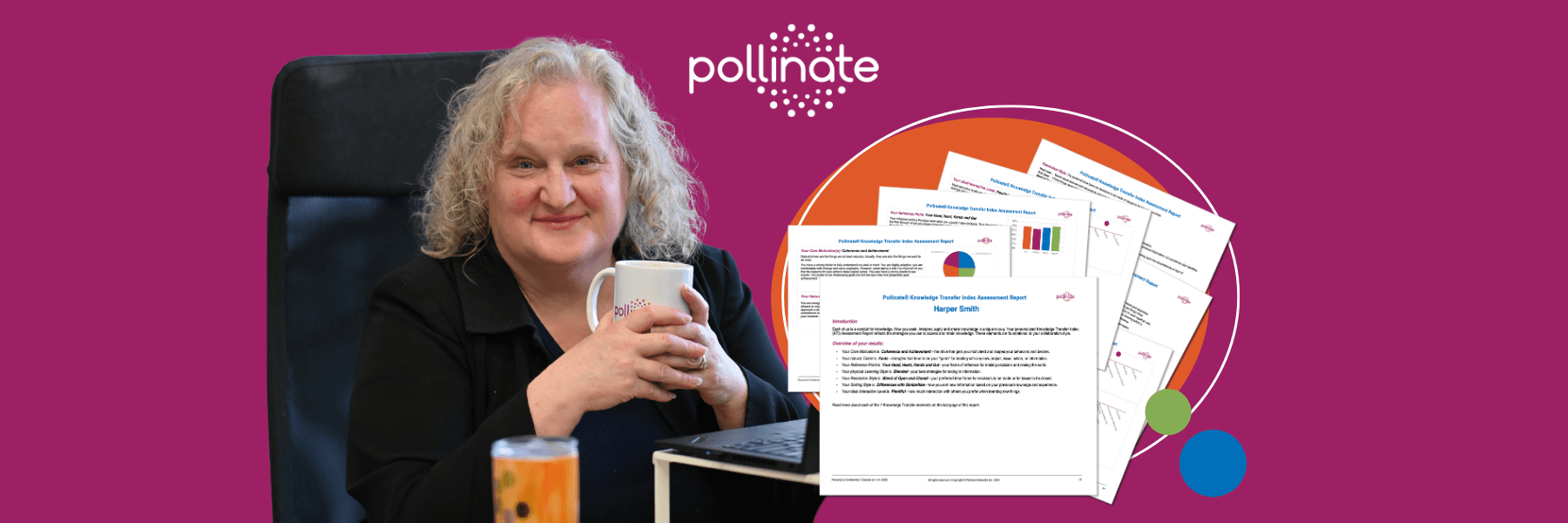
- Pre-meeting clarity: Along with the Pollinate KTI & Meet Your Match Report, AI can turn each person’s intake and goals into a one-page “First Meeting Brief” with suggested discussion prompts, shared focus areas, and potential misalignments to clarify early.
- Better first meeting outcomes: The mentor and mentee use the brief to confirm goals, define boundaries, and agree on what success looks like for the relationship.
- Momentum and follow-through: After the meeting, AI helps convert notes into a simple action plan, next steps, and a short check-in message, so progress does not get lost between sessions.
- Course correction over time: At agreed intervals (for example every 3 meetings), AI can help the pair reflect on what is working, what needs adjustment, and whether the goals or cadence should be updated.
Why this adds real value for mentoring programs:
- Faster trust-building because the first meeting is structured but still personal
- Clearer expectations
- Stronger retention because progress is visible and easier to sustain
- Better qualitative signals for program admins, without adding admin work for participants
2) A more personalized approach to who benefits most from AI support
Another practical point raised was that AI will not be equally helpful for every participant, at every moment. Monica noted that some people will open up more to an AI than to a human.
This suggests a useful design principle for mentorship initiatives:
- Offer AI as an optional support layer for reflection, drafting, and early-stage exploration.
- Use humans to lead when complexity, vulnerability, or stakes increase.
- Build choice into the mentoring program so participants can move between supports responsibly.
Where AI cannot go in mentoring: the human work that protects outcomes
1) Understanding must come first, and mentoring is how people get there
One of the most important mentoring takeaways from Monica was direct: “understanding must come first.”
She described understanding as knowing what matters, knowing what is irrelevant, and integrating the components that matter into a coherent view.
This is mentoring territory. A mentor can:
- spot when a mentee is using confident language without real clarity
- slow the conversation down and surface hidden assumptions
- share lived experience that helps a mentee build context, not just content
AI can help someone explore. Mentoring helps someone understand.
2) Psychological safety, equity, and high-stakes learning moments remain human-led
A participant asked how organizations decide which learning moments must stay human to protect psychological safety, accessibility, and equity.
Christy’s answer reflects what experienced mentoring leaders know: for vulnerable populations, or when decisions change the course of someone’s life, we need connection and perspective taking, meaning someone who can put themselves in another person’s shoes.
This is where mentoring best practices matter most. A good mentoring relationship provides:
- trust, especially when someone is uncertain or struggling
- the safety to name what is hard without fear of judgement
- accountability that is relational, not transactional
- support that is sensitive to context, identity, and real consequences
AI can assist around the edges. It cannot replace that relational container.
3) AI can support accessibility, but only when it is used properly
Christy also called out a major opportunity: AI can be a “real huge tool” for promoting accessibility, if it is used properly.
In mentoring programs, this can show up as:
- language and translation support
- drafting support for people who struggle to articulate goals on paper
- structured reflection prompts to help participants get unstuck
The keyword is “properly.” Accessibility improves when AI is integrated thoughtfully, with consent, clarity, and guardrails.
Practical guidance for mentoring leaders: how to use AI without weakening mentoring
If you manage a mentoring program, mentorship initiative, or mentor matching process, a simple operating model works well:
Use AI for preparation, exploration, and follow-through. Use mentors for understanding, judgement, and high-stakes human moments.
Here are a few concrete applications.
For mentees
- Bring a one-paragraph summary of the challenge, drafted with AI, to your mentoring session.
- Ask AI for three alternative ways to frame the problem, then discuss which framing is most accurate with your mentor.
- After the session, use AI to turn notes into a realistic action plan and a follow-up message.
For mentors
- Use AI to generate a short list of questions, then select only what fits the person and situation.
- Help mentees validate what matters and what is irrelevant, especially when AI outputs are confident but shallow.
- Keep trust-building and judgement calls human-led.
For program leaders
- Define which parts of your mentoring program can use AI, and which must remain human-led for psychological safety and equity.
- Make accessibility a design requirement, not an afterthought.
Closing thought: Mentoring is a crucial human skill for the AI age
Monica closed with a line that resonated strongly with our community: “I think mentoring is the business to be here with.”
We agree, and we would take it one step further…
Mentoring is a crucial human skill for the AI age.
As AI adds speed, structure, and scale, it also raises the bar on what people need in order to use those tools well. Mentoring is where people build the understanding, judgement, and confidence to interpret AI outputs, challenge assumptions, and choose the right next step. It is also where psychological safety lives, the space to say “I do not know yet,” to test ideas, and to learn in a way that respects context, values, and real consequences.
AI can help people generate options. Mentoring helps people make meaning, make decisions, and stay human while they do it.